Lesson 6 of 10 15 min

Location Controls

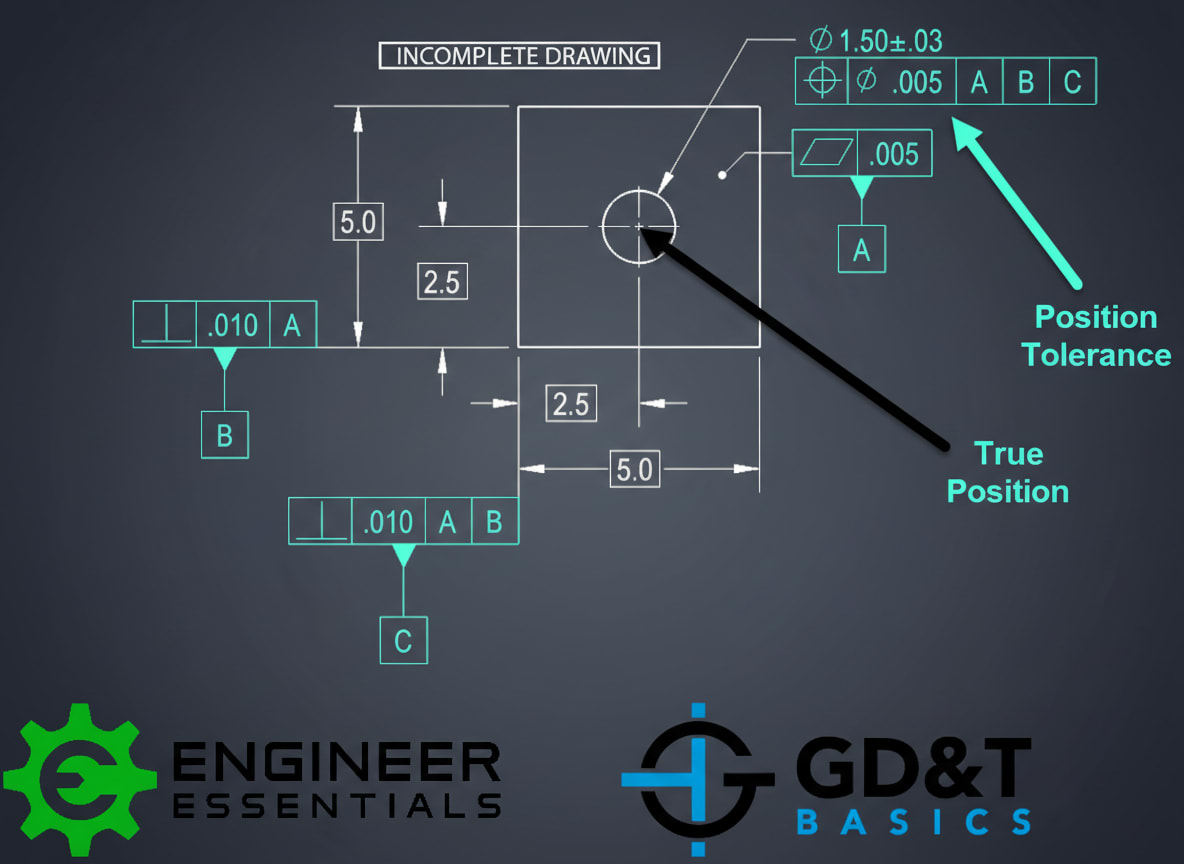
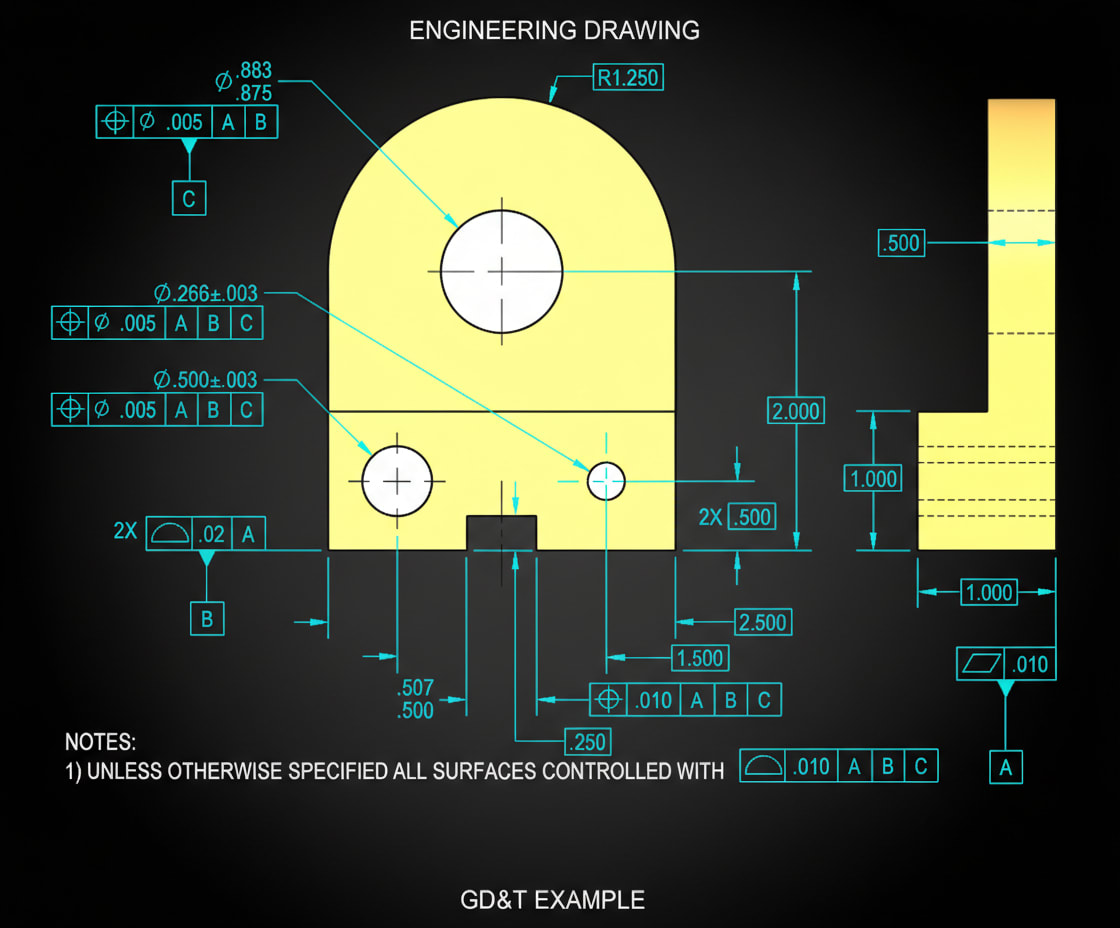
Position Callout on Drawing

What are Location Controls?

Location controls define where a feature must be located relative to a datum reference frame. They control the position of features like holes, pins, slots, and bosses.

The primary location control is:

SymbolNameControls
PositionLocation of feature's axis or center plane
Note: Concentricity and Symmetry were deprecated in ASME Y14.5-2018 in favor of Position with appropriate modifiers.

True Position

True position is the theoretically exact location of a feature as defined by basic dimensions from datums.

Basic dimensions are shown in boxes and have no tolerance:

         ┌────┐    ┌────┐
         │ 50 │    │ 30 │
         └────┘    └────┘
            │         │
            ▼         ▼
    ════════╬════════════════ Datum B
            ║
            ║    ⊙ ← Hole's true position
            ║
    ════════╬════════════════ Datum A

Position Tolerance

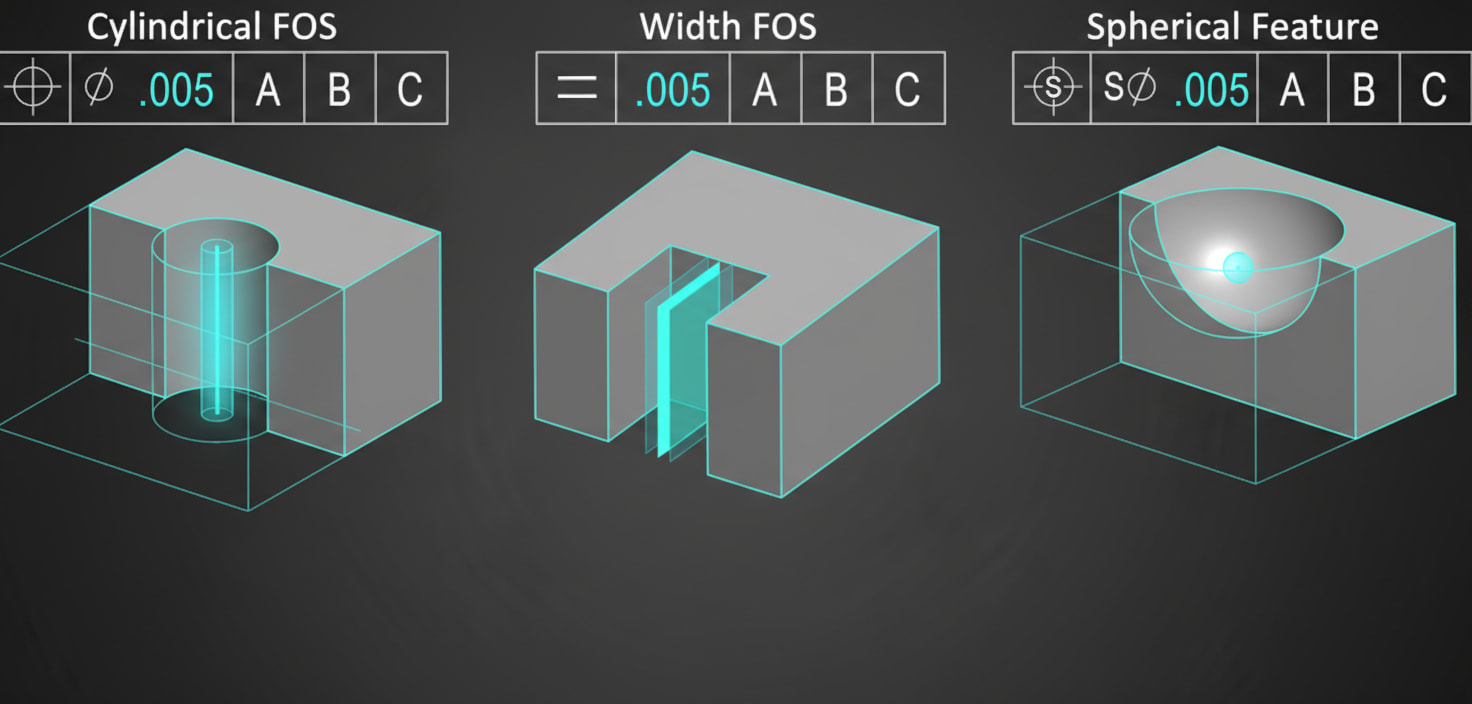
The position tolerance defines a cylindrical (or planar) zone within which the feature's axis must lie:

FCF: ┌───┬────────────┬────────┬────────┬────────┐
     │ ⊕ │ ⌀ 0.25 (M) │ A      │ B      │ C      │
     └───┴────────────┴────────┴────────┴────────┘
Reading: "Position tolerance of 0.25 diameter at MMC, relative to datums A (primary), B (secondary), C (tertiary)."

The Cylindrical Tolerance Zone

Position Tolerance Zone

For holes and pins, position creates a cylindrical zone:

                  ╭─────╮
    True         │  ⌀   │  ⌀ 0.25 tolerance zone
    Position ──► │  ○   │
                  ╰─────╯
                     │
    Actual axis must lie within this cylinder

Calculating Position Deviation

The position deviation formula:

Position Deviation = 2 × √(ΔX² + ΔY²)

Where:

  • ΔX = deviation from true position in X
  • ΔY = deviation from true position in Y
Example:
  • Hole center is 0.08mm off in X
  • Hole center is 0.06mm off in Y
  • Position deviation = 2 × √(0.08² + 0.06²) = 2 × 0.10 = 0.20mm

If tolerance is ⌀ 0.25, the part passes (0.20 < 0.25).

Bonus Tolerance (MMC/LMC)

Position Bonus Tolerance

When (M) is specified, you get bonus tolerance as the feature departs from MMC:

For a Hole (Internal Feature)

  • MMC = Smallest hole (most material)
  • LMC = Largest hole (least material)
Example:
Hole size: ⌀ 10.0 ± 0.2
MMC = 9.8mm (smallest)
LMC = 10.2mm (largest)

Position: ⌀ 0.25 (M)

If actual hole = 10.0mm:
Bonus = 10.0 - 9.8 = 0.2mm
Total position tolerance = 0.25 + 0.2 = 0.45mm

Bonus Tolerance Table

Actual Hole SizeBonusTotal Position Tolerance
9.8 (MMC)00.25
9.90.10.35
10.00.20.45
10.10.30.55
10.2 (LMC)0.40.65

Position for Hole Patterns

Position Applied to Feature Patterns

Position is commonly used for bolt hole patterns:

    ○───────○
    │       │
    │   ⊕   │  Basic dimensions locate pattern
    │       │
    ○───────○

FCF: ┌───┬────────────┬────────┬────────┐
     │ ⊕ │ ⌀ 0.50 (M) │ A      │ B      │
     └───┴────────────┴────────┴────────┘

All holes in the pattern must meet the position tolerance.

Composite Position Tolerance

For patterns requiring both pattern location AND hole-to-hole relationship:

┌───┬────────────┬────────┬────────┬────────┐
│ ⊕ │ ⌀ 0.50 (M) │ A      │ B      │ C      │  ← Pattern to datums
├───┼────────────┼────────┴────────┴────────┤
│ ⊕ │ ⌀ 0.15 (M) │                          │  ← Hole-to-hole
└───┴────────────┴──────────────────────────┘
  • Upper segment: Pattern location relative to datums (0.50)
  • Lower segment: Feature-to-feature relationship (0.15)

Position vs. Concentricity

CharacteristicPositionConcentricity (Deprecated)
What it controlsAxis locationMass center location
Zone shapeCylindricalCylindrical
ModifiersAllows MMC/LMCRFS only
InspectionSimpleComplex
Recommendation: Always use Position instead of Concentricity.

Key Takeaways

  • Position controls feature location relative to datum reference frame
  • Basic dimensions define true position (shown in boxes)
  • Position tolerance creates a cylindrical zone for axes
  • MMC modifier provides bonus tolerance as feature departs from MMC
  • Composite position controls both pattern location and feature-to-feature
  • Position replaces the deprecated Concentricity and Symmetry

---

Next Lesson: Profile Controls - controlling complex shapes and surfaces.