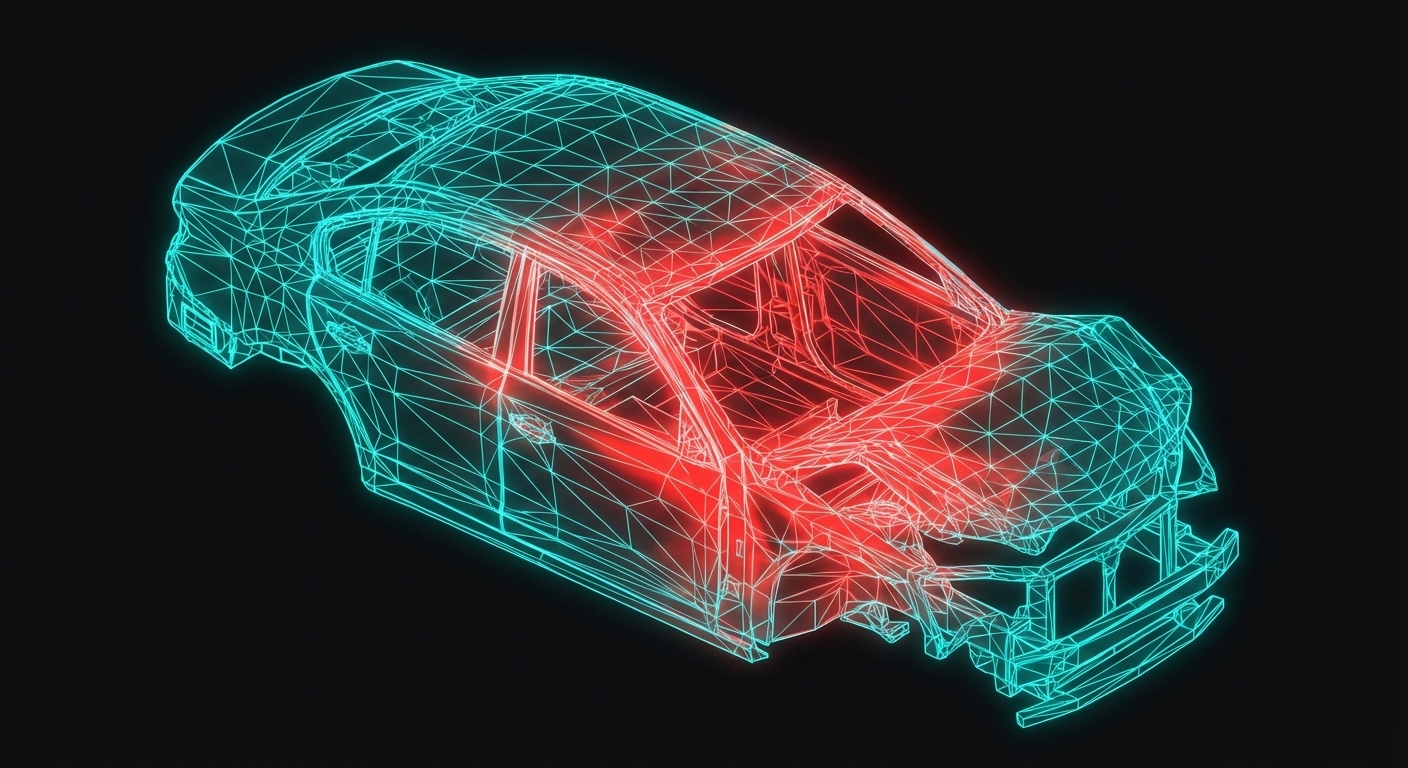
Crash Safety & Load Paths
The BIW must protect occupants in crashes while being as light as possible. This lesson covers how engineers design structures to manage crash energy.
The Safety Cage Concept
Modern BIWs are designed around a safety cage surrounded by crush zones:
Safety Cage Concept:
        ┌─────────────────────────┐
        │                         │
   ═════╪════╦═══════════╦════════╪═════
   CRUSH│    ║  SAFETY   ║        │CRUSH
   ZONE │    ║   CAGE    ║        │ZONE
   ═════╪════╩═══════════╩════════╪═════
        │                         │
        └─────────────────────────┘
      Front                      Rear
      Rails                      Rails

═══ Crush zones: Deform to absorb energy
║║║ Safety cage: Remains rigid to protect occupants
Safety Cage Components
| Component | Function |
|---|---|
| A/B/C Pillars | Vertical protection, rollover |
| Roof rail | Side-to-side roof connection |
| Rocker panels | Floor-to-pillar connection |
| Floor cross-members | Lateral stiffness |
| Cowl | Front boundary of cabin |
The safety cage uses UHSS (1000-2000 MPa) to remain rigid during impact.
Sponsored
70% of India's auto industry trusts Skill-Lync
For training their engineers in CAD, CAE & simulation
Learn More
Crash Load Paths
Frontal Impact (NCAP, IIHS)
Frontal crashes account for ~50% of fatalities. Energy flows through:Frontal Impact Load Path:
IMPACT
↓
┌─────────┴─────────┐
│ BUMPER BEAM │
└────────┬──────────┘
│
┌────────────┼────────────┐
↓ ↓ ↓
┌───────┐ ┌─────────┐ ┌───────┐
│ FRONT │ │ FRONT │ │ FRONT │
│ RAIL │ │ SUBFRAME│ │ RAIL │
│ (L) │ │ │ │ (R) │
└───┬───┘ └────┬────┘ └───┬───┘
│ │ │
│ ┌─────┴─────┐ │
│ │ TUNNEL │ │
│ └───────────┘ │
↓ ↓
┌───────┐ ┌───────┐
│ROCKER │ │ROCKER │
│(L) │ │(R) │
└───────┘ └───────┘Frontal Impact Design Strategies
| Strategy | Purpose |
|---|---|
| Progressive crush | Front rails fold predictably |
| Load splitting | Distribute energy to multiple paths |
| Firewall push-back | Minimize footwell intrusion |
| Steering column collapse | Protect driver from wheel |
Front Rail Design
Front rails are engineered to crush progressively:
Front Rail Crush Initiators:
┌─────┬───────────────────┐
│     │                   │
│  ●══╪══●═════════●═════│  ← Trigger holes
│     │                   │     (crush initiators)
└─────┴───────────────────┘
  Bumper                 Cowl
  mount                  joint

● = Crush initiator (hole, bead, or notch)
═ = Controlled folding zones
Small Overlap Crash
The IIHS small overlap test (25% of car width) challenged traditional designs:
Small Overlap Impact:
           ┌──────────────────┐
           │                  │
   IMPACT→ │●                 │
           │                  │
           └──────────────────┘

Only 25% of vehicle width contacts barrier- Extended bumper beams
- Wheel-to-structure load paths
- Upper load path through shotgun/A-pillar
- Subframe energy absorption
Side Impact
Side crashes are dangerous due to minimal crush space. Load paths include:Side Impact Load Path:
IMPACT
↓
┌──────────────┴──────────────┐
│ │
│ ┌───────────────┐ │
│ │ B-PILLAR │ │
│ │ (primary) │ │
│ └───────┬───────┘ │
│ │ │
┌────┴────┐ ┌────┴────┐ ┌──────┴────┐
│ ROOF │ │ FLOOR │ │ ROCKER │
│ RAIL │ │ X-MEMBER│ │ PANEL │
└─────────┘ └─────────┘ └───────────┘Side Impact Protection Strategies
| Strategy | Component | Function |
|---|---|---|
| Intrusion limit | B-pillar | Rigid UHSS resists intrusion |
| Load spreading | Cross-members | Distribute to far side |
| Door beams | Doors | Localized stiffness |
| Seat cross-members | Floor | Protect occupant pelvis |
B-Pillar Side Impact Behavior
The B-pillar must resist bending while transferring load:
Sponsored
3,000+ engineers placed at top companies in 2024
Mahindra, Bosch, TATA ELXSI, Capgemini and more
See Placement Stats
B-Pillar Response (side impact):
        IMPACT
           ↓
    ┌──────┴──────┐
    │  ROOF RAIL  │ ← Load transferred to roof
    └──────┬──────┘
           │
    ┌──────┴──────┐
    │  B-PILLAR   │ ← Resists bending
    │  (UHSS)     │
    └──────┬──────┘
           │
    ┌──────┴──────┐
    │   ROCKER    │ ← Load to floor structure
    └─────────────┘