Introduction to Body-in-White (BIW)
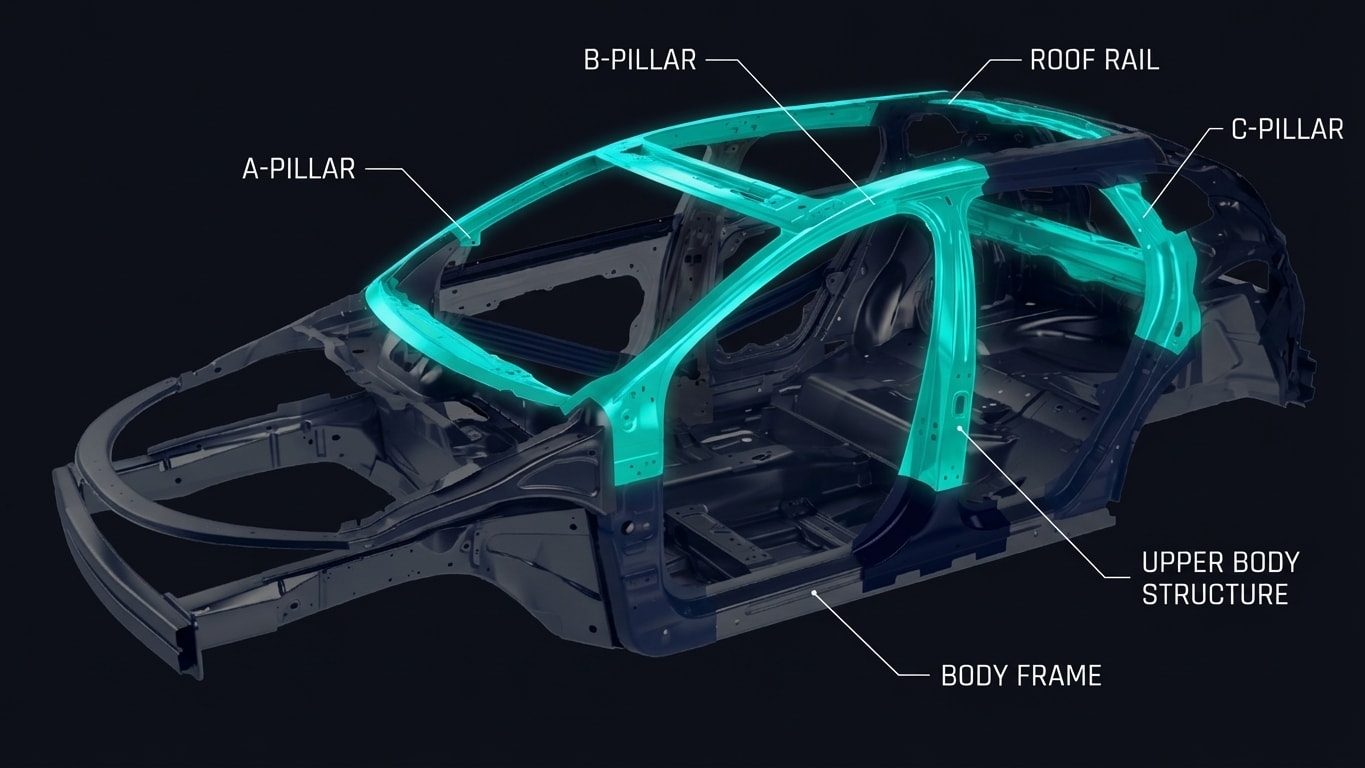
What is Body-in-White?
Body-in-White (BIW) refers to the stage in automotive manufacturing where a car body's sheet metal components have been welded together, but before painting, trim, and powertrain installation.The term originated from the white primer coat applied to protect the bare metal before final painting. Today, it represents the structural skeleton of a vehicle—the foundation that everything else is built upon.
Why is BIW Important?
The BIW is arguably the most critical component of any vehicle:
| Aspect | BIW's Role |
|---|---|
| Safety | Absorbs crash energy, protects occupants |
| Stiffness | Provides torsional rigidity for handling |
| Weight | Directly impacts fuel efficiency and EV range |
| NVH | Affects noise, vibration, and harshness |
| Cost | Represents ~25-30% of vehicle manufacturing cost |
BIW vs. Body Structure
While often used interchangeably, there's a subtle difference:
Sponsored
Master CATIA, NX, LS-DYNA, HyperMesh, ANSYS
The exact tools used by Mahindra, Bosch & TATA ELXSI
See All Tools
- BIW (Body-in-White): The unpainted body shell, including welded sheet metal
- Body Structure: The complete structural system, sometimes including closures (doors, hood, trunk)
- BIW + Closures: Often called "Body-in-White Complete"