50% OFF - Ends Soon!

Lesson 8 of 10 15 min

Design for Injection Molding

Overview

Design for Manufacturing (DFM) ensures parts can be efficiently and economically produced. For injection molding, key principles are:

  • Uniform wall thickness
  • Proper draft angles
  • Appropriate ribs and bosses
  • Radii and fillets
  • Avoiding undercuts

Wall Thickness

Uniform Walls
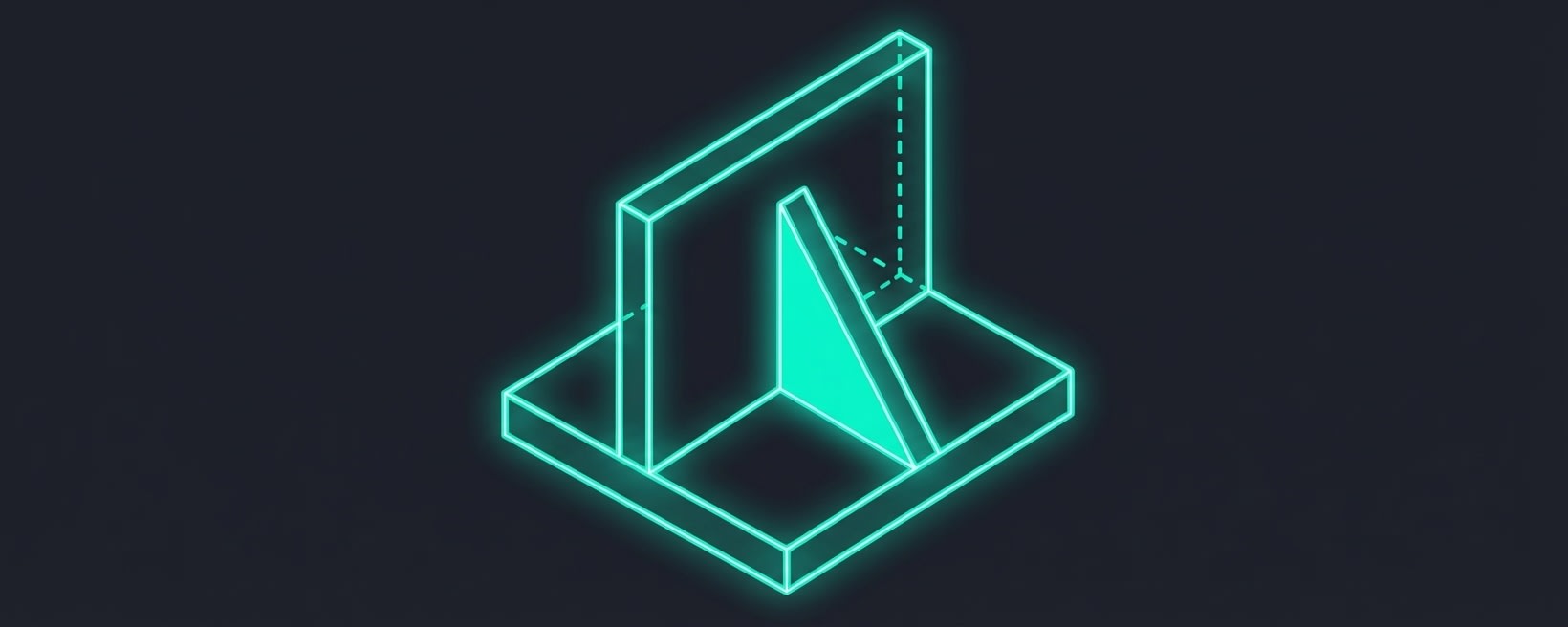
Wall Thickness

The most important DFM rule: maintain uniform wall thickness throughout the part.

Why Uniformity Matters:
  • Uneven cooling causes warpage
  • Thick sections cause sink marks
  • Thick sections extend cycle time
  • Flow imbalances cause weld line issues
Recommended Wall Thickness:
MaterialTypical Range (mm)
PP1.0-3.0
ABS1.5-3.5
PA661.0-3.0
PC1.5-4.0
PEEK1.5-4.5

Transitioning Thickness

When thickness changes are unavoidable:

Sponsored

Harshal got placed at Fiat Chrysler as Design Engineer

Watch his video testimonial on how the program helped him

See His Journey
  • Gradual transitions (3:1 slope minimum)
  • Never abrupt steps
  • Locate transitions away from stress areas
Bad: 90° step change Good: Gradual 3:1 taper

Draft Angles

Draft Angle

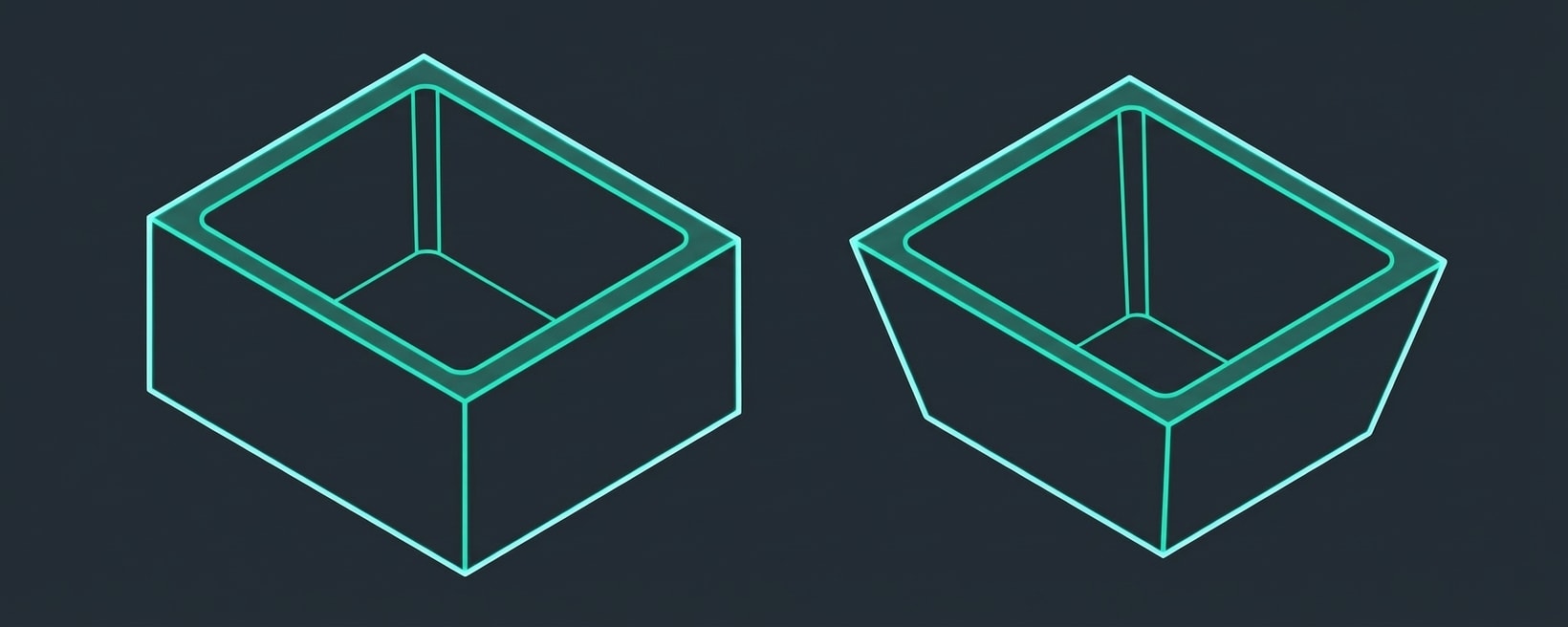
Draft is a slight taper on vertical walls that allows the part to release from the mold.

Why Draft is Needed:
  • Part shrinks onto core during cooling
  • Without draft, ejection force can damage part
  • Vacuum can form between part and mold
Recommended Draft:
SurfaceMinimum Draft
Smooth surfaces0.5-1°
Textured surfaces1-2° + 1° per 0.025mm texture depth
Deep ribs1-2°
Shutoffs3-5°
Rule of Thumb: Add 1° of draft per inch (25mm) of depth, with 0.5° minimum.

Ribs

Rib Design

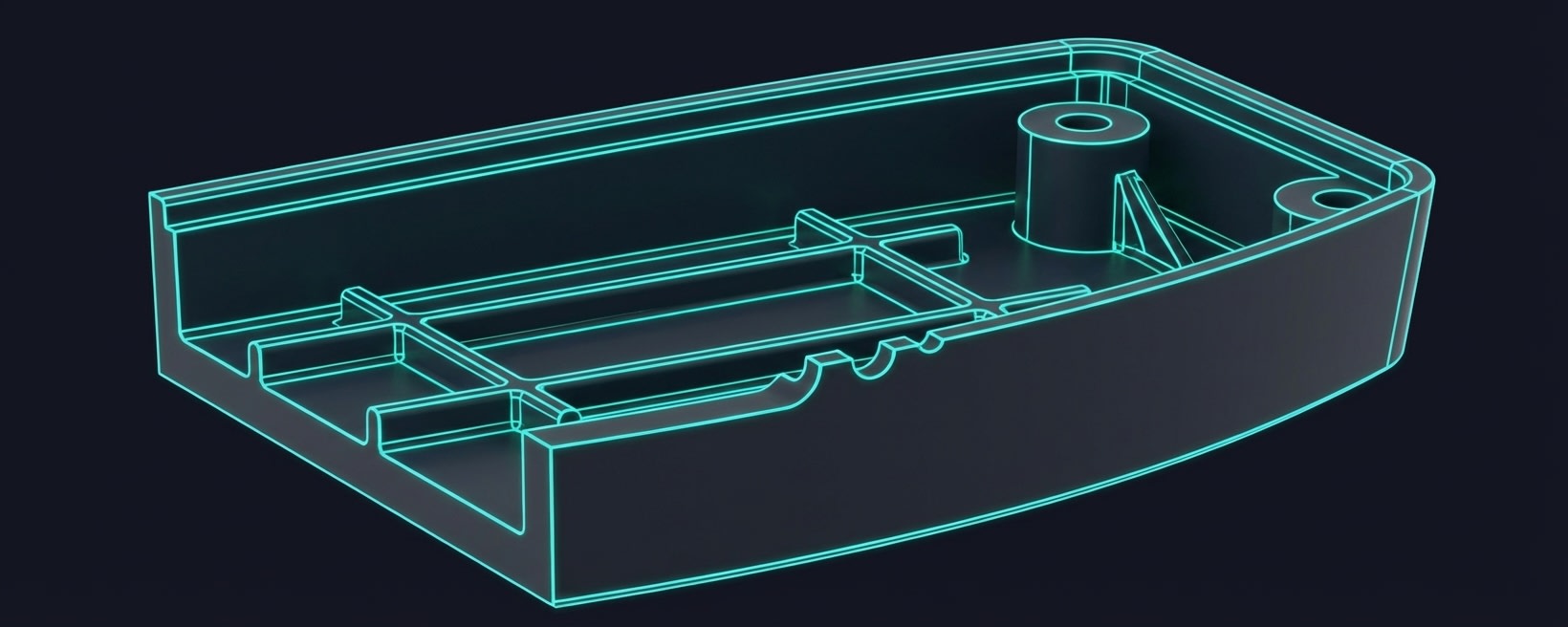
Ribs add stiffness without increasing wall thickness.

Design Guidelines

ParameterGuideline
Thickness50-60% of wall thickness
Height≤3× wall thickness
Draft0.5-1° per side
Base radius0.25-0.5× wall thickness
Spacing≥2× wall thickness apart
Why 50-60% Thickness?
  • Thicker ribs cause sink marks on opposite surface
  • Thinner ribs may not fill properly

Rib Orientation

  • Perpendicular to load for bending resistance
  • Crosshatch pattern for bidirectional stiffness
  • Consider flow direction during fill

Bosses
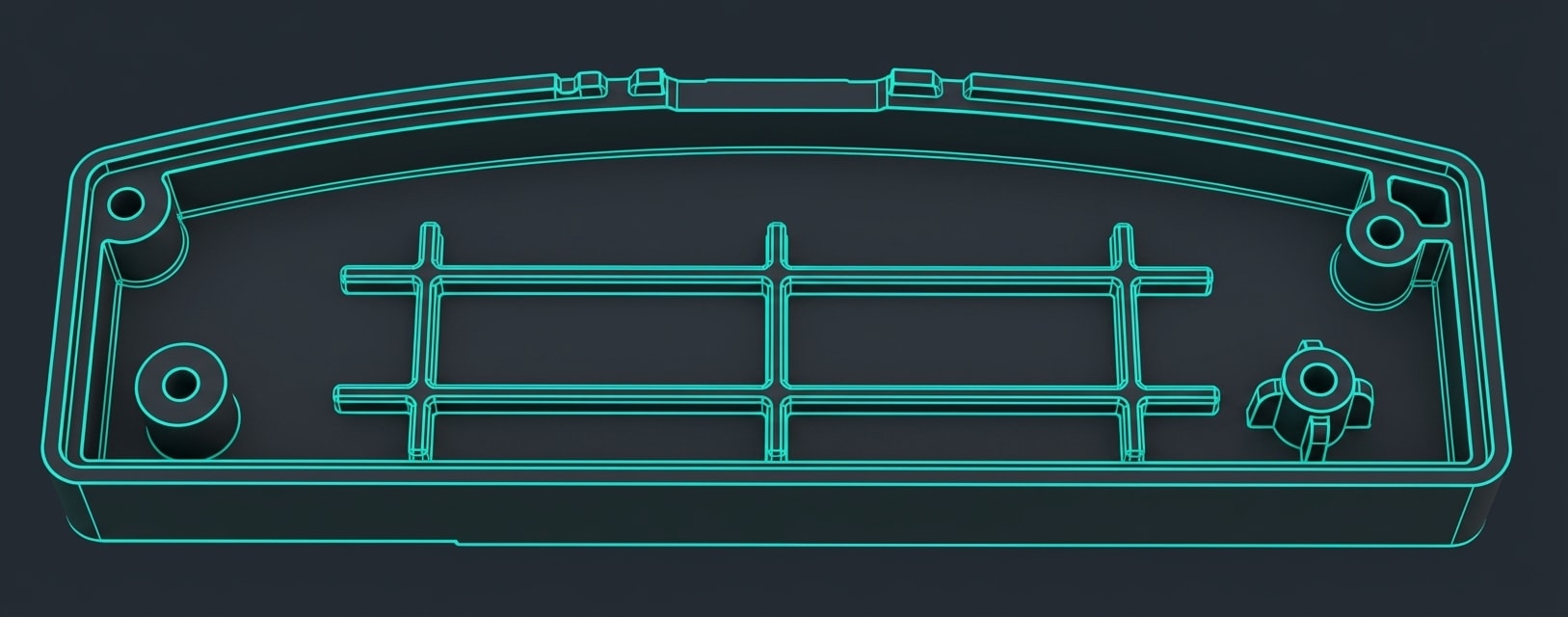
Boss Design

Bosses provide mounting points for screws, pins, or inserts.

Sponsored

3,000+ engineers placed at top companies in 2024

Mahindra, Bosch, TATA ELXSI, Capgemini and more

See Placement Stats

Design Guidelines

ParameterGuideline
OD2-2.5× screw diameter
Wall thickness50-60% of nominal wall
Height≤2.5× OD
Draft0.5° minimum on OD and ID
Base radius0.25× wall minimum

Common Mistakes

Problem: Boss attached directly to wall Solution: Use connecting rib or gusset, not solid connection Problem: Boss wall too thick Solution: Core out to 50-60% of nominal wall Problem: Tall, unsupported boss Solution: Add gussets for stability
🎯 3,000+ Engineers Placed
Sponsored
Harshal Sukenkar

Harshal

Fiat Chrysler

Abhishek

Abhishek

TATA ELXSI

Srinithin

Srinithin

Xitadel

Ranjith

Ranjith

Core Automotive

Gaurav Jadhav

Gaurav

Automotive Company

Bino K Biju

Bino

Design Firm

Aseem Shrivastava

Aseem

EV Company

Puneet

Puneet

Automotive Company

Vishal Kumar

Vishal

EV Startup

Radii and Fillets

Sharp corners create:

  • Stress concentrations (crack initiation)
  • Flow hesitation (incomplete fill)
  • Cooling variations (warpage)

Guidelines

LocationRecommended Radius
Inside corners0.5× wall thickness minimum
Outside cornersInside radius + wall thickness
Rib base0.25-0.5× wall thickness
Boss base0.25× wall minimum
Rule: Inside radius = 0.5× wall, outside radius = 1.5× wall

Undercuts

Features that prevent straight pull from the mold:

Types of Undercuts

  • External undercuts — Protrusions on outside surface
  • Internal undercuts — Cavities or holes inside the part

Solutions

Side Actions (Slides):
  • Mechanical cams move cores perpendicular to mold open
  • Add cost and complexity
  • Require maintenance
Lifters:
  • Angled pins that move during ejection
  • For internal undercuts
  • Limited undercut depth
Collapsible Cores:
  • Cores that collapse inward during ejection
  • For internal threads, deep undercuts
  • High complexity and cost
Stripping (Bump-offs):
  • Part flexes over undercut during ejection
  • Only for flexible materials (PP, PE)
  • Undercut <5% of diameter

Avoid When Possible

Best practice: Design to eliminate undercuts entirely.

Sponsored

175+ hours of industry projects & 12 IIT faculty sessions

Master CATIA, NX, LS-DYNA, HyperMesh and more

View Full Curriculum
Instead OfUse
External snap hookThrough-hole snap (no undercut)
Internal threadThreaded insert (post-mold)
Side holesHoles at parting line

Gate Considerations for Design

Gate location affects:

  • Appearance — Gate mark visible
  • Strength — High stress at gate
  • Fill pattern — Weld line locations
Design Guidelines:
  • Leave flat area for gate
  • Avoid gating on cosmetic surfaces
  • Gate at thickest section
  • Consider flow length to all areas

Parting Line

The line where mold halves meet:

Considerations:
  • Visible witness line on part
  • Flash can occur at parting line
  • Affects draft direction
Guidelines:
  • Place on non-cosmetic surface when possible
  • Design for simple, straight parting line
  • Complex parting lines add tooling cost

DFM Checklist

ItemCheck
Wall thickness uniform?
Thick sections cored out?
Draft on all vertical surfaces?
Ribs ≤60% of wall?
Bosses properly designed?
All corners radiused?
Undercuts eliminated or minimized?
Gate location suitable?
Parting line placement acceptable?

Key Takeaways

  • Uniform wall thickness is the #1 rule—variations cause defects
  • Ribs and bosses: 50-60% of wall thickness to avoid sink marks
  • Draft: 0.5-1° minimum, more for textured surfaces
  • Radius all corners: inside = 0.5×wall, outside = 1.5×wall
  • Avoid undercuts when possible; use slides/lifters when necessary
  • Consider gate location and parting line in early design

---

Next Lesson: Materials Selection — choosing the right plastic for the application.
3,000+ Engineers Placed in Top Companies
Career Growth

3,000+ Engineers Placed in Top Companies

Join the ranks of successful engineers at Bosch, Tata, L&T, and 500+ hiring partners.